When you breastfeed your baby, what you eat, breathe or drink may find itself in your milk supply. It's therefore critical that you pay close attention to what you ingest in order to ensure the safety of your baby. It's not just a question of safety, you also want to ensure that your baby is getting all the nutrition they need for their development.
There are already many online guidelines on what drugs are safe to take while breastfeeding. For instance the American Academy of Pediatrics (AAP) provides useful guidance regarding drug exposures while breastfeeding. They state that "most medications and immunizations are safe during lactation" but warn against a few categories of drugs such as "pain medications, antidepressants, and drugs to treat substance/alcohol abuse". Another useful resource is LactMed, an online database edited by the US National Library of Medicine. There you can find information on the effect of most drugs and substances sold in the US on your lactation.
There are however very few trustworthy guidelines in English on the use of Traditional Chinese Medicine (TCM) while breastfeeding. The goal of this article is to provide you with a few pointers so you can better judge how to use TCM while breastfeeding.
Today's use of TCM while breastfeeding
In China and other parts of Asia, it's extremely common to use Chinese Medicine products or follow TCM practices whilst breastfeeding. In fact, right after birth, a vast majority of the 18 million Chinese women who give birth every year undergo a tradition called Yuezi. Yuezi is a 42-day period during which everything you eat or drink is dictated by Chinese Medicine. Yuezi aims to repair the trauma of birth in a woman's body and to ensure the baby is well breastfed. It is a tradition dating back to 10th century AD so it's fair to say there's a well documented understanding of what Chinese Medicinal products should be taken while breastfeeding.
In the West however Chinese Medicine remains largely unknown and there are many misconceptions around it. Few are those who know that at its core, TCM is a very natural way to cure oneself. TCM treatments always revolve around taking herbal teas, changing your diet or other soft-medicine practices such as acupuncture or Qi Gong.
There are many Chinese Medicine products designed to help with breastfeeding. Most are aimed at either increasing milk supply or at preventing blocked ducts or mastitis. They're all based on Chinese Medicine theories. In Chinese Medicine most medical issues can be traced to either a problem with your Qi supply (see here our explanation of what is Qi) or a Yin-Yang imbalance in your body.
Chinese Medicine to improve milk supply
It is believed that the act of birth-giving results in extremely depleted levels of Qi and Blood in one's body. It makes sense: when you give birth you spend an enormous amount of energy and lose a lot of Body Fluids.
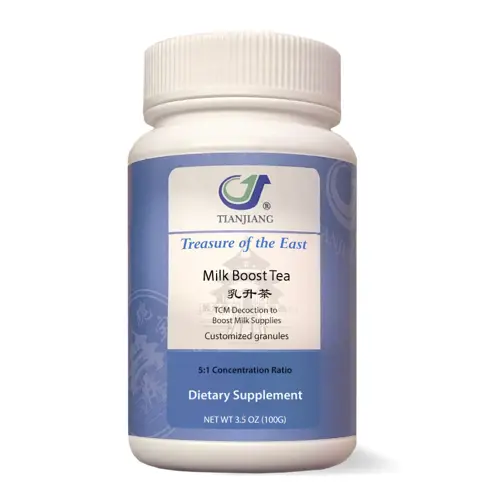
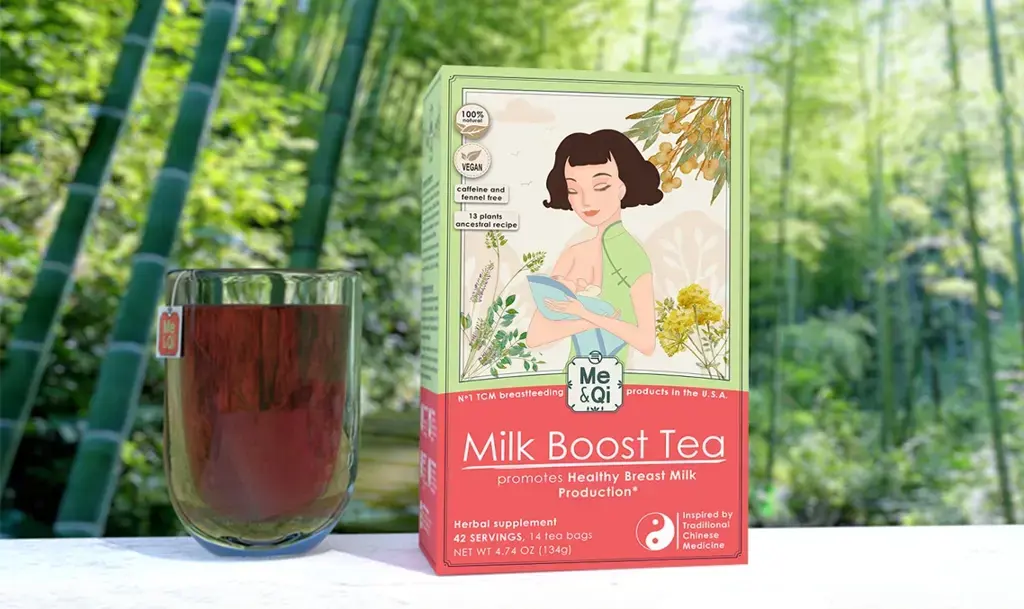
This is why Chinese Medicine aimed at increasing milk supply like Milk Boost Tea contain many herbs that supply Qi or Blood such as King solomon's seal root (Huang Jin), Milkvetch roots (Huang Qi), Dong quai (Dang Gui) and Codonopsis roots (Dang Shen). If you want to know more about milk production according to Chinese Medicine you can read our dedicated article about it.
Chinese Medicine to avoid or remove engorgement and blocked ducts
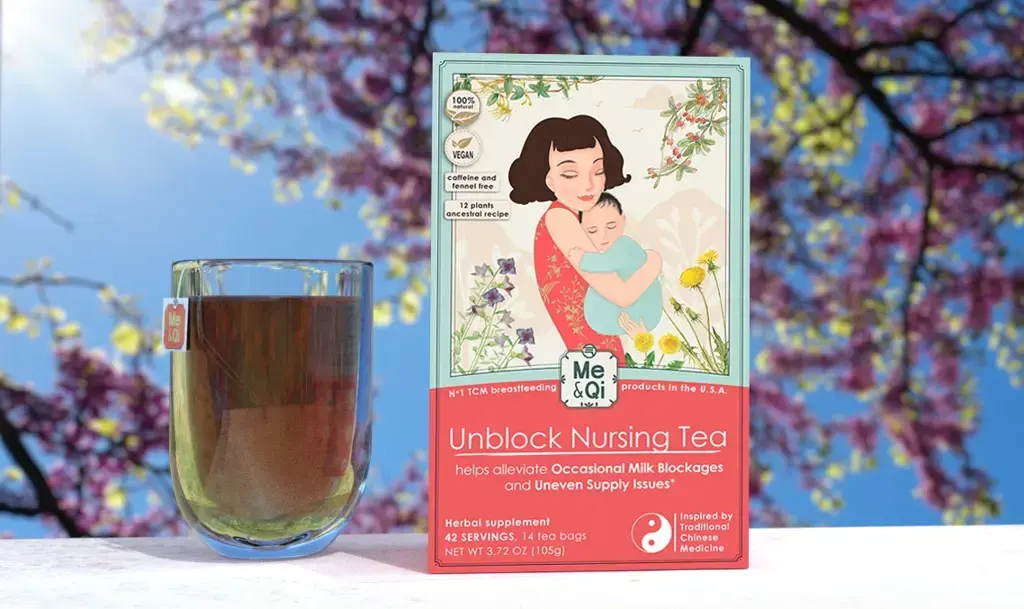
Blocked ducts or mastitis, when looked at through the prism of Chinese Medicine, can be traced to an issue with your Qi. More specifically it is thought that Qi can get blocked in your Meridians and that these blockages leads to an accumulation of Heat in your breasts. In the view of Chinese Medicine, this is why one often has fever with blocked ducts or mastitis: fever is the surest sign that one has too much heat in their body.
The first priority of a Chinese Medicine to unblock milk ducts or treat mastitis like Unblock Nursing Tea is therefore to cool down the body so as to reduce the accumulation of heat. This is why it contains cooling herbs like Dandelions or Honeysuckle. To learn more about the use of Chinese Medicine for engorgement and blocked ducts, read our dedicated article about it.
Is Chinese Medicine effective?
Whilst Chinese Medicine bases itself on widely different concepts than Western Medicine, it shouldn't be dismissed. Millions of women use Chinese Medicine every year to help with their breastfeeding issues and many find it extremely effective.
It's not because some medical concepts might seem strange given today's knowledge that the Chinese haven't uncovered plants or medical concepts that have a real beneficial effect. In fact many of today's modern medicine are based on plants discovered in the context of Chinese Medicine (like Artemisinin, the leading drug against malaria extracted from Sweet Wormwood, a Chinese Medicine plant). Similarly acupuncture, a practice entirely developed based on Chinese Medicine's concepts of Qi and Meridians is today widely accepted by the scientific community and most modern hospitals in the Western world have acupuncturists on site.
What precautions to apply when taking TCM while breastfeeding?
If you buy Chinese Medicine that's specifically designed for nursing women like Milk Boost Tea or Unblock Nursing Tea, especially if they're from an established brand, you should feel safe to drink it without precaution.
It's for Chinese Medicine that's designed for non-breastfeeding related issues that you should consider taking a few precautions. For those it's always better to look at the side of caution, especially if you breastfeed. If you're about to take a new Chinese Medicine consider following this procedure:
- Make sure that you're buying Chinese Medicine from a reputable source and that the medicine is prepared specifically for breastfeeding women.
- Before taking the medicine, store a bit of milk. Like that, if you don't react well to the medicine, you can still feed your baby with milk that's not potentially affected by it. Store enough for 2-3 days, which corresponds to the average time it takes for food/drinks to be eliminated from the body.
- Take the medicine right after breastfeeding, like that you'll have time to observe the effects on yourself before you breastfeed next. Better yet, consider feeding your baby with a bottle for 12 hours after taking the medicine so you can have enough time to see how you react to the medicine (any adverse reaction would have shown up within 12 hours).
- If you react well to the medicine, breastfeed your baby a small quantity at first and observe her/his reaction for a few hours. Look specifically for signs of unusual discomfort (e.g. being very cranky), wheezing, vomiting or any redness appearing on the skin. If your baby is her/his normal self a few hours after the feeding, you can feel comfortable breastfeeding her/him normally.
Lastly never hesitate to contact a doctor or TCM practitioner if you have any questions. You should consult a doctor immediately if you or your baby has any problem that you think might be linked to the medicine. Don't forget to take the medicine package with you so the doctor can check the ingredients' list and better understand what may have caused the issue.
Which TCM herbs are likely safe while breastfeeding?
First of all, please note that you shouldn't solely base yourself on online resources to determine what you should or shouldn't take while breastfeeding. Make sure to also ask your doctor or a lactation specialist.
It's very difficult to make a list of TCM ingredients that are likely safe based on Western resources. Most TCM ingredients, even some of the most common ones, have not been properly assessed by Western authorities.
For instance take Jujube dates, an incredibly common fruit in China that is also used in Chinese Medicine for its ability to tonify the Spleen, replenish Qi and reduce stress levels. We couldn't find studies in the Western world that established its safety for breastfeeding women: the LactMed database contains no entry on the fruit and WebMD states that "there is not enough information available" to know if it's safe. To a Chinese that sounds ludicrous since it's just as common to eat Jujube dates as it is to eat apples or any other fruits! Another interesting example is Sichuan pepper, a spice that's so common in China that in some regions of the country (like in Sichuan) people eat it for all three meals, breakfast, lunch and dinner! Again there's no entry for it in LactMed and WebMD states that there's "not enough information" about it!
To compile the list below we've therefore mostly used Chinese sources. More specifically this list is taken from the China Food and Drug Administration, the Chinese equivalent of the FDA. They have several levels of designations for TCM ingredients and the safest designation is ingredients that are both classified as food and TCM ingredients. This means that such ingredients, like Jujube dates or Sichuan pepper, can be freely added to food or TCM medications without limitations. That'd be the equivalent to the GRAS (Generally Recognized As Safe) classification for the FDA.
Before you read the list please also remember the importance of moderation. Nutmeg for instance, a TCM ingredient that's also very common in Western cooking, is perfectly harmless when eaten in normal amounts as a spice for your dishes or as an ingredient in a herbal tea. But if eaten in large amounts it can be pretty harmful as it contains myristicin, a psychoactive substance. It therefore goes without saying that each of the ingredients below should be taken with moderation in mind. Again you should have a TCM professional prepare your teas as they'll be trained on what amounts are safe to use (also always let them know you're breastfeeding).
With all this being said, here is the list of TCM ingredients that are generally recognized as safe by the China Food and Drug Administration (we've also added links to each ingredient if you want to read more):
| Name | Pinyin | Chinese |
| Adzuki Bean | Hóng xiaodòu | 红小豆 |
| Amomum villosum pods | Shā rén | 砂仁 |
| Angular Solomon's seal root (polygonatum odoratum) | Yù zhú | 玉竹 |
| Apricot kernel | Xìngrén | 杏仁 |
| Balloon flower roots (platycodon) | Jiégeng | 桔梗 |
| Dadai orange flowers | Dài dài huā | 代代花 |
| Black pepper | Hēi hújiāo | 黑胡椒 |
| Black sesame seeds | Hēi zhīma | 黑芝麻 |
| Brown mustard seeds (brassica juncea) | Huáng jièzi | 黄芥子 |
| Buddha's hand (finger citron) | Fóshou | 佛手 |
| Japanese bush cherry seeds (pruni semen) | Yùlirén | 郁李仁 |
| Cao guo (amomum tsao-ko) | Cao guo | 草果 |
| Cape jasmine fruit (gardenia jasminoides) | Zhī zi | 栀子 |
| Chicory | Jújù | 菊苣 |
| Chinese cinnamon (cinnamomum cassia) | Ròuguì | 肉桂 |
| Chinese liquorice (glycyrrhiza uralensis) | Gāncao | 甘草 |
| Chinese nutmeg (torreya grandis) | Feizi | 榧子 |
| Chinese plum (prunus mume) | Wūméi | 乌梅 |
| Chinese quince (pseudocydonia sinensis) | Mùguā | 木瓜 |
| Star anise | Bājiao huíxiāng | 八角茴香 |
| Chinese white olive (canarium album) | Qīngguo | 青果 |
| Chrysanthemum flowers | Júhuā | 菊花 |
| Cilantro | Yánsuī | 芫荽 |
| Clove | Dīngxiāng | 丁香 |
| Common purslane | Ma chi xiàn | 马齿苋 |
| Common reed rhizome (phragmites communis) | Xiān lú gēn | 鲜芦根 |
| Dahurian angelica root | Báizhi | 白芷 |
| Dandelion | Púgōngyīng | 蒲公英 |
| Dong quai (angelica sinensis) | Dāngguī | 当归 |
| Dried citron (citrus medica) | Xiāng yuán | 香橼 |
| Dried nanfengmiju mandarin | Jú hóng | 桔红 |
| Dried nanfengmiju mandarin peel | Jú pí | 橘皮 |
| Fennel seeds | Xiao huíxiāng | 小茴香 |
| Fermented soybean | Dàn dòuchi | 淡豆豉 |
| Field thistle (cirsium setosum) | Xiao jì | 小蓟 |
| Foxnut seeds (euryale ferox) | Qiànshí | 芡实 |
| Ginger | Jiāng | 姜 |
| Ginkgo seeds | Báiguo | 白果 |
| Ginseng | Rénshēn | 人参 |
| Goji berry | Gouqi zi | 枸杞子 |
| Greater burdock seeds (arctium lappa) | Niú péng zi | 牛篣子 |
| Hawthorn berry | Shānzhā | 山楂 |
| Heal-all (prunella vulgaris) | Xià kūcao | 夏枯草 |
| Hemp seeds | Huo má rén | 火麻仁 |
| Honey | Fēngmì | 蜂蜜 |
| Honeysuckle flowers | Shān yín huā | 山银花 |
| Houttuynia herb (houttuynia cordata) | Yú xīng cao | 鱼腥草 |
| Hyacinth beans (lablab beans) | Bái biandòu | 白扁豆 |
| Indian gooseberry (phyllanthus emblica) | Yú gānzi | 余甘子 |
| Japanese honeysuckle flowers (lonicera japonica) | Jīnyínhuā | 金银花 |
| Job's tears (coix lacryma-jobi) | Yìyi rén | 薏苡仁 |
| Jujube dates | Zao | 枣 |
| Jujube seeds | Suānzao rén | 酸枣仁 |
| Kencur root (kaempferia galanga) | Shānnài | 山奈 |
| King Solomon's seal root (polygonatum kingianum) | Huángjīng | 黄精 |
| Kombu (kelp) | Kūnbù | 昆布 |
| Korean mint (agastache rugosa) | Huò xiāng | 藿香 |
| Kudzu root | Gégēn | 葛根 |
| Kudzu root powder | Fen gé | 粉葛 |
| Lablab flowers | Bái biandòu huā | 白扁豆花 |
| Lalang grass rhizome (imperata cylindrica) | Xiān bái máogēn | 鲜白茅根 |
| Lesser galangal root (alpinia officinarum) | Gāoliáng jiāng | 高良姜 |
| Lily bulb | Baihé | 百合 |
| Long pepper (piper longum) | Bì bá | 荜茇 |
| Long-stamen onion bulb (allium macrostemon) | Xièbái | 薤白 |
| Longan fruit | Lóngyan ròu | 龙眼肉 |
| Lophatherum gracile herb (lophatherum gracile) | Dànzhú yè | 淡竹叶 |
| Lotus leaf | Hé yè | 荷叶 |
| Lotus seeds | Liánzi | 莲子 |
| Malt | Màiyá | 麦芽 |
| Malva nut (scaphium affine) | Pàng dàhai | 胖大海 |
| Masson's pine pollen | Sōng huāfen | 松花粉 |
| Monk fruit (siraitia grosvenorii) | Luóhànguo | 罗汉果 |
| Mulberry fruit | Sāngrèn | 桑葚 |
| Mulberry leaves | Sāng yè | 桑叶 |
| Nutmeg | Ròu dòukòu | 肉豆蔻 |
| Pagoda tree flowers (sophora japonica) | Huái mi | 槐米 |
| Palmleaf raspberry fruit (rubus chingii hu) | Fù pénzi | 覆盆子 |
| Peach seeds | Táorén | 桃仁 |
| Peppermint | Bòhé | 薄荷 |
| Perilla leaves (perilla frutescens) | Zi sū | 紫苏 |
| Perilla seeds (perilla frutescens) | Zi sū zi | 紫苏籽 |
| Poria mushroom (wolfiporia extensa) | Fúlíng | 茯苓 |
| Radish seeds (semen raphani) | Láifú zi | 莱菔子 |
| Rose flowers (rosa rugosa) | Méiguī huā | 玫瑰花 |
| Saffron | Xī hóng huā | 西红花 |
| Sea buckthorn fruit | Shājí | 沙棘 |
| Sharp-leaf galangal fruit (alpinia oxyphylla) | Yì zhì rén | 益智仁 |
| Shiral leaves (microcos paniculata) | Bù zhā yè | 布渣叶 |
| Sichuan pepper | Huājiāo | 花椒 |
| Sicklepod seeds (senna obtusifolia) | Juémíngzi | 决明子 |
| Sponge gourd (luffa cylindrica) | Sīguā | 丝瓜 |
| Sword bean (canavalia gladiata) | Dāo dòu | 刀豆 |
| Turmeric root | Jiānghuáng | 姜黄 |
| Vietnamese balm (elsholtzia ciliata) | Xiāngrú | 香薷 |
| Yam | Shānyào | 山药 |