How horseradish found its place in Traditional Chinese Medicine formulas?
Introduction
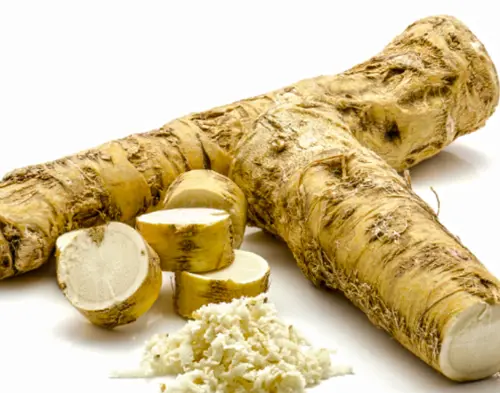
When most people think of horseradish, they imagine the pungent condiment served alongside roast beef—or perhaps that green paste served with sushi. In fact, if you've ever enjoyed "wasabi" at a Japanese restaurant, there's a good chance you were actually eating La Gen (辣根), the Chinese name for horseradish.
While La Gen is not found in the ancient Chinese pharmacopoeia—it originated in Eastern Europe and Turkey over 2,000 years ago—its nature and actions align remarkably well with classical Chinese medicinal principles, making it a valuable addition to modern TCM practice.
La Gen Today: The "Wasabi" in Your Sushi
La Gen (辣根), also known as 马萝卜 (horse radish), was introduced to China by the British around 80 years ago. But its most widespread use today is as a substitute for true wasabi (山葵).
Real wasabi is expensive and must be freshly grated. La Gen is cheap and stable. The result? Over 90% of the "wasabi" served in Japanese restaurants worldwide is actually dyed horseradish. The two share a similar nose-clearing pungency because both contain isothiocyanate compounds.
This culinary role hints at La Gen's medicinal value: its powerful ability to open the nasal passages, stimulate digestion, and provide antimicrobial benefits—all properties recognized in TCM.
A Practical Example: Qing Bi Tang (清鼻汤)
La Gen's therapeutic potential becomes even clearer when we look at how it's used in TCM formulas.
Ma Huang (麻黄, Ephedra sinica) is one of the most important herbs in the Chinese pharmacopoeia, used for over 3,000 years to treat respiratory conditions. However, in 2004, the U.S. FDA banned dietary supplements containing ephedrine alkaloids due to safety concerns, creating a challenge for TCM practitioners who relied on Ma Huang in classical formulas.
Since Ma Huang has multiple therapeutic actions—releasing the exterior, promoting Lung Qi, and relieving wheezing—no single herb can replace it entirely. Practitioners use different herb combinations depending on which functions are needed for a specific formula.
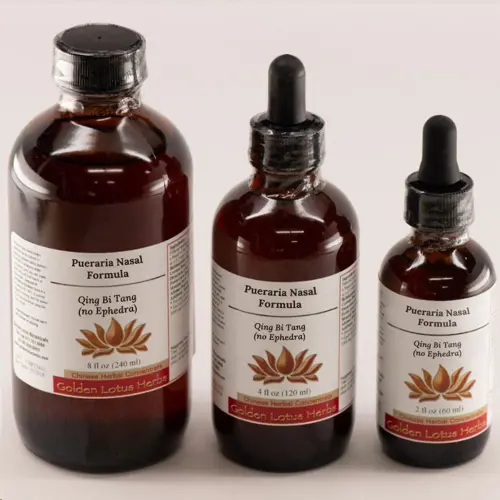
One interesting example is the Qing Bi Tang offered by Golden Lotus Botanicals. This formula originally contained Ma Huang for its nasal-opening and exterior-releasing functions. In their ephedra-free version, La Gen and Bai Zhi (白芷) are used as substitutes.
This particular combination works well for this nasal formula because:
La Gen contributes:
- Strong pungent, warm nature to dispel Wind-Cold
- Powerful nasal-opening effect
- Promotes urination (matching one of Ma Huang's functions)
Bai Zhi contributes:
- Classical Exterior-releasing herb that disperses Wind-Cold
- Strong affinity for the head and face—particularly effective for nasal congestion and sinus headaches
- Enters the Lung and Stomach Channels
- Well-documented safety profile
Together, these two herbs cover the key therapeutic actions needed for a nasal formula targeting Wind-Cold with sinus symptoms. The warm, pungent nature of both herbs releases exterior pathogens, while their combined nasal-opening effects provide the decongestant action that Ma Huang would traditionally supply.
It's worth noting that this is just one example—other Ma Huang-containing formulas might use entirely different substitutes depending on the therapeutic goal. For instance, formulas focused on asthma relief might use Bai Guo (ginkgo nut) and Sang Bai Pi (mulberry root bark), while those emphasizing diaphoresis might combine Gui Zhi (cinnamon twig) with Fang Feng (siler).
Why La Gen Works: TCM Properties
So how can a European herb substitute for a classical Chinese medicinal? The answer lies in TCM's classification system, which is based not on geographic origin but on a substance's inherent properties and actions.
Although horseradish was not part of classical Chinese medicine, contemporary TCM practitioners have classified it according to traditional principles:
Nature and Flavor
- Nature (性): Warm (温)
- Flavor (味): Pungent/Acrid (辛)
Channel Tropism (归经)
La Gen enters the following channels:
- Stomach (胃经)
- Gallbladder (胆经)
- Bladder (膀胱经)
Primary Actions (功效)
- Aids Digestion and Harmonizes the Stomach (消食和中) La Gen stimulates digestive function and helps resolve food stagnation—which is why it pairs so well with raw fish in sushi.
- Benefits the Gallbladder (利胆) The herb supports healthy bile flow and gallbladder function.
- Promotes Urination (利尿) La Gen has mild diuretic properties that help resolve dampness and support urinary function.
- Dispels Wind-Cold (散寒) Like many warm, pungent herbs, La Gen can help expel external Wind-Cold pathogens from the body.
- Opens the Nasal Passages Anyone who has eaten fresh horseradish—or that green "wasabi" paste—knows its powerful ability to clear the sinuses.
- Promotes Qi Circulation (行气) The pungent nature of La Gen helps move stagnant Qi, particularly in the digestive system.
These properties explain why La Gen can substitute for Ma Huang in the Qing Bi Tang formula: both herbs are warm and pungent, both dispel Wind-Cold, and both powerfully open the nasal passages. La Gen's diuretic action also mirrors one of Ma Huang's secondary functions.
Conditions La Gen Can Treat
Based on its properties and actions, La Gen is indicated for the following conditions:
Digestive Issues
- Indigestion and food stagnation
- Poor appetite due to Stomach Cold
- Bloating and abdominal fullness
- Sluggish digestion
Respiratory Conditions
- Nasal congestion and sinus blockage
- Early-stage Wind-Cold invasion (common cold with chills)
- Cough with clear or white phlegm
Urinary and Hepatobiliary
- Difficulty urinating (小便不利)
- Cholecystitis (gallbladder inflammation)
Musculoskeletal
- Joint pain aggravated by cold and damp (Cold-Damp Bi syndrome)
- Rheumatic conditions
Dosage Recommendations
Since La Gen is not a classical TCM herb, dosages are based on clinical experience and comparison with similar herbs:
| Form | Recommended Dosage | Notes |
|---|---|---|
| Fresh root | 3–9g per day | Grated or minced |
| Dried root | 2–6g per day | In decoction |
| Fresh juice | Small amounts | Mixed with honey |
Administration: Can be taken internally mixed with honey, or applied externally as a liniment (浸酒搽).
Cautions and Contraindications
Who Should Avoid La Gen
- Yin Deficiency with Heat Signs (阴虚有热): The warm, pungent nature can further deplete Yin and aggravate heat symptoms.
- Stomach Fire or Stomach Yin Deficiency: May irritate the gastric lining and worsen conditions like gastritis or ulcers.
- Pregnancy: Strong pungent herbs that vigorously move Qi are generally contraindicated during pregnancy.
- Hot Constitutions (热性体质): Those who already run warm should use with caution.
General Precautions
- Do not exceed recommended dosages—excessive use can injure Qi and Blood
- May cause stomach upset, heartburn, or diarrhea in sensitive individuals
- Can irritate skin and mucous membranes with direct contact or excessive consumption
- Those with hyperthyroidism should use cautiously due to goitrogen content (common in Brassicaceae plants)
- Contraindicated for those with digestive ulcers, hemorrhoids, or throat inflammation
The Broader Lesson: TCM's Adaptability
The case of La Gen illustrates something profound about Traditional Chinese Medicine: its framework is not limited to herbs that were known in ancient China. The TCM classification system—based on nature, flavor, channel tropism, and therapeutic actions—can be applied to any medicinal substance.
When a European herb like horseradish demonstrates warm, pungent properties that dispel cold, open the nasal passages, and promote digestion, it can be incorporated into TCM practice just as logically as any classical Chinese herb. This adaptability has allowed TCM to remain relevant and practical across different geographic regions and regulatory environments.
Conclusion
La Gen (辣根) demonstrates how Traditional Chinese Medicine continues to evolve while staying true to its foundational principles. Though horseradish originated thousands of miles from China, its properties align naturally with TCM's classification system, making it a useful addition to the modern practitioner's toolkit.
So the next time you dip your sushi into that familiar green paste, remember: you're not just enjoying a condiment—you're experiencing a medicinal herb with the power to clear your sinuses, aid your digestion, and dispel Wind-Cold from your body. La Gen may be masquerading as wasabi, but its therapeutic value is entirely its own.
This article is for educational purposes only and is not intended as medical advice. Please consult a qualified TCM practitioner before using any herbs for therapeutic purposes.
References:
- 中华本草 (Chinese Materia Medica)
- A+ Medical Encyclopedia - La Gen
- Golden Lotus Botanicals - Pueraria Nasal Formula #1 / Qing Bi Tang